
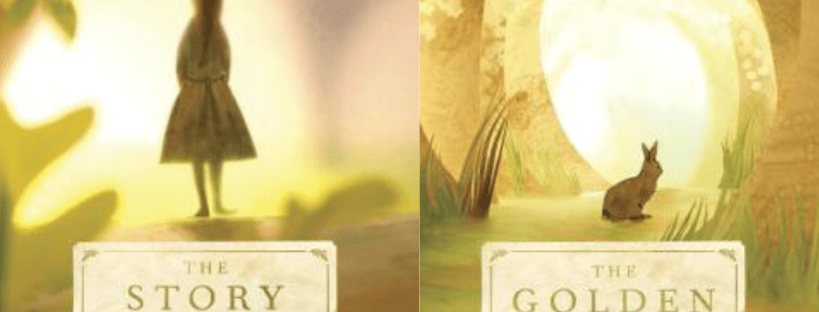


One of the things I mentioned liking about The Story Girl in my introduction post is ‘watching’ the children play. Maybe because–between raising and working with children most of my life–I think a lot about how children play. Is it better now? Was it better then? Maybe somewhere in between? I feel sorry for children that won’t ever know what it’s like to be in a world without the internet, a world without the feeling of boredom and having to make your own fun. I love seeing what children can come up with when they have the time and freedom to explore the possibilities.
The King children and their cousins and friends had to make their own fun and they had no trouble doing so. They loved being together in the orchard, telling stories and dreaming up fun things to do. Their ‘games’ weren’t always easy, quick games, either… sometimes they went on for weeks. Like their dream books – they spent weeks recording their dreams just for fun. It started to go downhill when they heard they could spice up their dreamlife by eating certain foods before bed, which had them sneaking illicit bedtime snacks, interrupting their sleep and even making them sick. Once the grown-ups put a stop to that nonsense, their dreams began to lose luster and the game trickled off.
Grown people were so strangely oblivious to the truly important things in life.
They once had a competition to see which boy could give the best sermon at the stone “pulpit” in the orchard. (They weren’t entirely sure if this was a “proper” game to play and decided it was best to go ahead without asking the adults.) And in the fall they challenged themselves to see who could eat the bitter apples without making a face.

I enjoyed all the discussion about what’s proper and what’s not. The children take it very seriously and can be quite horrified by things like going somewhere barefoot or going to church in your old dress.
The children also had their share of unplanned ‘adventures’ to fill the time, like the time Paddy the cat was sick and they worried that Peg Bowen had put a curse on him. They got up their courage to go see her about it, taking gifts, in the hopes that she would lift the curse. Another time they thought the Judgment Day was upon them and they spent a whole day fretting about it.
When we went to bed it was settling down to a stormy night, and the rain was streaming wetly on the roof, as if the world, like Sara Ray, were weeping because its end was so near.

There was a day Dan was feeling especially spiteful, so instead of heeding Felicity’s pleas not to eat the unknown berries, Dan ate them. “Felicity was one of those unfortunate people whose protests against wrong-doing serve only to drive the wrong-doer further on her sinful way.” The grown-ups had gone away, leaving the kids in the care of Uncle Roger. It didn’t turn out to be as much fun as they thought it would be. There was a lot of bickering and hurt feelings (as well as hurt bellies).
Even Cecily, the meek and mild, was snappish, and complained of headache. Peter had gone home to see his mother and Uncle Roger had gone to Markdale on business. Sara Ray came up, but was so snubbed by Felicity that she went home, crying. Felicity got the dinner by herself, disdaining to ask or command assistance. She banged things about and rattled the stove covers until even Cecily protested from her sofa. Dan sat on the floor and whittled, his sole aim and object being to make a mess and annoy Felicity, in which noble ambition he succeeded perfectly.
The way the children interact with each other also interests me. There are the King children (Dan, Felicity and Cecily), their cousins (Sara Stanley “the Story Girl”, Felix, and Beverley), and their two friends (Peter “the hired boy” and “poor” Sara Ray). The Kings seem to feel it’s their job to help Peter become more acceptable in the eyes of others. He should be going to church each week like they do, but he dare not have holes in his socks when he goes. And heaven forbid he laugh in church. He is hopelessly infatuated with Felicity, despite the fact that Felicity makes it known that she would never stoop to marrying a hired boy. My heart was happy for him when he was sick with the measles and his friends were worried sick about him and they all wrote him letters. In Peter’s reply letter, he wrote: “I’m awful glad I have so many nice friends, even if I am only a hired boy. Perhaps I’d never have found it out if the measles hadn’t struck in. So I’m glad they did but I hope they never will again.”
(It’s interesting to note that in the TV adaptation of The Story Girl – called Road to Avonlea (1990-1996) – Felicity does end up marrying the hired boy, but his name is Gus, not Peter.)
“Poor” Sara Ray is made out to be pathetic. She cries a lot, she worries a lot, her mother is strict and over-protective which limits Sara Ray’s activities. She seems to consider herself lucky that the King children let her come play with them. It makes me wish someone would write a book about Sara Ray’s life after The Story Girl and The Golden Road in which she blossoms into a strong, happy woman. I often seem to be wishing for spin-off stories about secondary characters. In Sarah’s blog post “This old blue chest holds a tragedy”, Sarah points out that Sara Ray wants to know what’s next after listening to one of the Story Girl’s stories. I, like Sarah and Sara Ray, find that “I always like to know what happens afterwards.”
At the beginning of the book I was amused by the descriptions LMM gives of some of her characters as introduction. Felix was “very sensitive about his plumpness. He was always taking exercises to make him thin, with the dismal result that he became fatter all the time.” Felicity, considered the beautiful one, “had also delightful hands and wrists. At every turn of them a dimple showed itself. It was a pleasure to wonder what her elbows might be like.” (Imagine noticing the dimples in someone’s wrists and imagining what their elbows might look like!) As for the Story Girl, Dan tells Felix and Bev upon their arrival that “she isn’t a bit pretty… but you’ll think she is when she’s talking to you.”
The Story Girl’s words fell on the morning air like pearls and diamonds. Even her prepositions and conjunctions had untold charm, hinting at mystery and laughter and magic bound up in everything she mentioned.
The Story Girl herself has things to tell Bev and Felix when they arrive. She reluctantly agrees that Felicity is beautiful, and that she likes Felicity very well, but then says that “Felicity is stupid. It’s not ill-natured of me to say that. It’s just the truth… Cecily is ever so much cleverer.” She declares that Aunt Olivia “is lovely. But she is twenty-nine, you know. That’s pretty old.” And Uncle Roger “teases people too much. You ask him a serious question and you get a ridiculous answer.” Poor Sarah Ray’s “conscience is always troubling her for doing things she’s sure her mother won’t approve, but it never prevents her from doing them. It only spoils her fun. ” I enjoy LMM’s descriptions of people as much as I enjoy her descriptions of nature.

I’ll leave you with a few passages I love from The Story Girl…
The dark crept into the orchard like a dim, bewitching personality. You could see her–feel her–hear her. She tiptoed softly from tree to tree, ever drawing nearer. Presently her filmy wings hovered over us and through them gleamed the early stars of the autumn night.
Haylofts are delicious places, with just enough of shadow and soft, uncertain noises to give and agreeable tang of mystery. The swallows flew in and out of their nests above our heads, and wherever a sunbeam fell through a chink the air swarmed with golden dust. Outside of the loft was a vast, sunshiny gulf of blue sky and mellow air, wherein floated argosies of fluffy cloud, and airy tops of maple and spruce.
November dreamed that it was May. The air was soft and mellow, with pale, aerial mists in the valleys and over the leafless beeches on the western hill. The sere stubble fields brooded in glamour, and the sky was pearly blue. The leaves were still thick on the apple trees, though they were russet hued, and the after-growth of grass was richly green, unharmed as yet by the nipping frosts of previous nights. The wind made a sweet, drowsy murmur in the boughs, as of bees among apple blossoms.
November wakened from her dream of May in a bad temper. The day after the picnic a cold autumn rain set in, and we got up to find our world a drenched wind-writhen place, with sodden fields and dour skies. The rain was weeping on the roof as if it were shedding the tears of old sorrows; the willow by the gate tossed its gaunt branches wildly, as if it were some passionate, spectral thing, wringing its fleshless hands in agony; the orchard was haggard and uncomely; nothing seemed the same except the stanch, trusty, old spruces.
If LMM had had her way, she would have stopped at the end of The Story Girl, but instead went on to write a sequel, The Golden Road, which I will post about next time. Are you content with just one book, or do you like to see what happens next?
Be sure to check out these other blog posts that have been written about The Story Girl and The Golden Road:
My introduction post: The Story Girl Readalong: #ReadingStoryGirl
On Sarah’s blog:
An Invitation to read The Story Girl and The Golden Road
A Necklace of Expressive Words
“The best piece of work I have yet done” #ReadingStoryGirl
“This old blue chest holds a tragedy” #ReadingStoryGirl
On Marcie’s blog:
November 2023, In My Bookbag (also, L.M. Montgomery)
If I’ve missed you, please let me know or leave a link in the comments!
Photo Credits: Daughter #1
 Consumed by Ink
I’ve read them both now and was glad for the incentive! I enjoyed reading your thorough review. Curious now about the suggestion that LMM didn’t want to write a sequel, maybe you’ll say more on the next post.
With this one, I was surprised that so much of the content had to do with religious ideas and practices, though not in an overly pious and sentimental way. The innocent wonder and faith of childhood was there, along with quite some digs at the “whited sepulchres” of organized religion. I found religion more of a presence than in any of the other LMM books I’ve read, and I wondered if there was some reason behind that – did she set out to explore this topic? Or did it just happen to come in?
I actually have found that most of her books have some religious content, mostly in the form of light jabs at the constitution, which I always enjoy. There’s often the debate between the Methodists and Presbytarians, and the children are often in awe of it all. It seems to loom large in their lives. And it most of her characters’ lives in some way.
If you want more background on how LMM felt about writing The Story Girl versus The Golden Road, see Sarah’s blog post: https://sarahemsley.com/2023/11/17/the-golden-road-of-youth-readingstorygirl/
Thanks for joining in, Lory! 🙂
I might be remembering this wrong, but I think LMM is writing these shortly before/around the time that she decides to marry Ewan who’s either studying to be or is already a minster? (Despite not having felt great passion in their relationship, despite her having felt that kind of passion with an/other/s previously.) So maybe she’s auditioning for the role of minister’s wife? Hopefully you, Naomi, or Sarah has the timeline in mind to test this theory? Heheh
That would make sense! I wondered actually if they had been written for a Sunday School paper or something like that.
Yes, she’s about to marry Ewan who is already a minister. It doesn’t seem as though she’s trying to impress him, though, based on the way she writes abut the subject of religion and church. Ha!
Well if she WAS auditioning, it doesn’t necessarily mean she wanted the role, she might have only wanted the practice. lol
I enjoyed your post, Naomi, and I agree, LMM’s descriptions of people are (almost) as wonderful as her descriptions of the natural world. Like Lory, I’m also curious about your statement that LMM didn’t want to write a sequel, especially since she leaves unanswered the mystery of the Awkward Man’s locked room, which the Story Girl vows to discover. That doesn’t happen till The Golden Road, which made me wonder whether LMM had, in fact, planned to write a sequel when she finished The Story Girl. I can’t quite fathom that she would have held out that tantalizing story line–the solving of the mystery of the locked room–and not followed up on it!
Many thanks to you and Sarah for providing the excuse to finally read these two novels. I look forward to the next Montgomery readalong!
I think it was more that she didn’t enjoy writing it like she did The Story Girl, but as usual, felt pressured to get it done. It amazes me that she felt this way about so many of her books, yet you’d never know it when reading them – they’re so full of beauty and joy.
I’m so glad you were able to read along with us, Marianne!
Excellent point about the value of boredom and the need to create your own opportunities for fun. I too like the discussions of proper and improper behaviour—lots of material there for LMM. I haven’t seen Road to Avonlea and am interested to hear that Felicity does marry the hired boy. I think you should write novels about Peter and Sara Ray—I agree that they do deserve more and I want to find out what happens next!!
The description of the Story Girl’s looks made me think of Gwendolyn Harleth in George Eliot’s novel Daniel Deronda: the opening line is, “Was she beautiful or not beautiful?”
Road to Avonlea is only loosely based on The Story Girl, but it’s still interesting to compare. On the show, Felicity is the oldest – Sara Stanley is younger. And there’s no Sara Ray or Peter, until Gus comes along. Jasper and Aunt Olivia get married! I didn’t see all the episodes, but my younger siblings watched it every week and sometimes I watched it with them.
Oh, how I wish I could write those books! 🙂
Oh, that’s interesting that Sara Ray is absent from the series. I hope you’ll consider writing those stories someday—though I guess I don’t want to be one of those readers who is clamouring for a sequel and thus puts too much pressure on the author!
Ha! 🙂
What a nice post to read and return to this world! I’ve read these books many times and love these characters. Your opening thoughts on play have made me think maybe LMM has had a greater influence on my parenting than I might have thought since the sort of childhood she gives so many of her characters is so much like what I wish for my own children!
Sometimes, when my kids were small, I wished that I could just lift our family up and plunk us right into the middle of an LMM book.
Thanks for reading, Karissa!
Oh, that sounds pretty nice! If only!
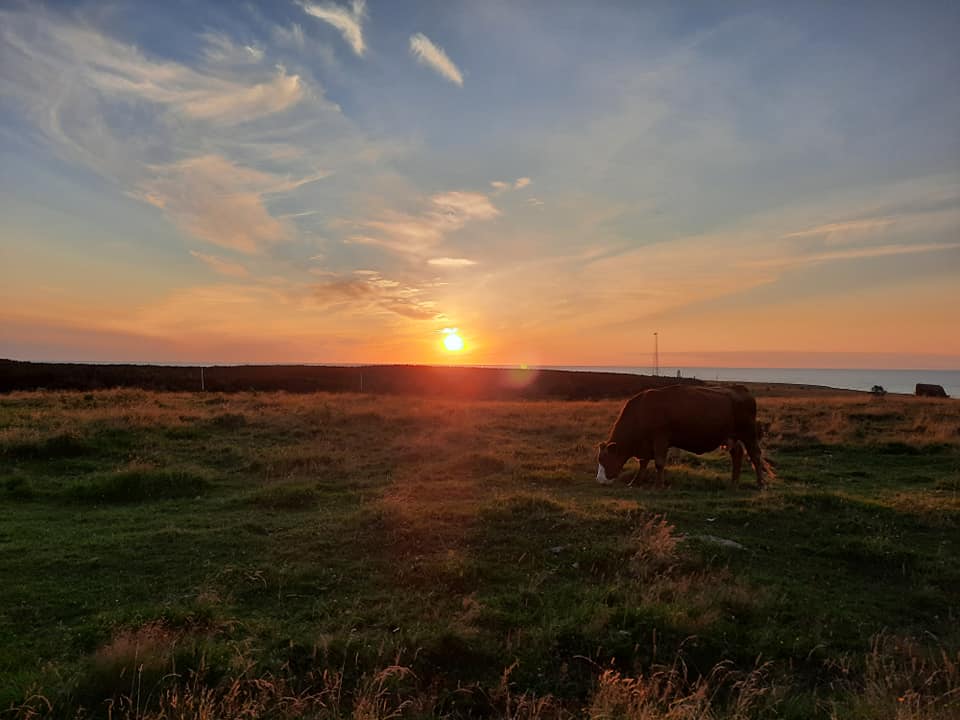
I don’t remember it much at all, but I watched and loved Road to Avonlea when I was a kid. I haven’t read these books but I must say how gorgeous the photos are that you included! Especially the one with the cow and the water in the background, it’s motivating me to go east for a sightseeing trip!
I love tempting people to NS! Lol
There are going to be more photos in my post on The Golden Road, too. 😉
I didn’t see all the episodes of Road to Avonlea, but watched enough of it with my younger siblings that I could follow along. I was already in high school by then, so wasn’t as interested.
I enjoyed reading your thoughts and you’ve convinced me to add this one to my TBR list!
Yay!
I think I feel about the children’s play in this book much the same way that I find myself feeling about novels-about-reading…I want to see it captured on the page, because it’s so important to me (I make a point of keeping a sense of play in my weekends, even now) but I don’t often really feel it in the narrative. Both this book and Rainbow Valley didn’t feel like they were about real children for me…or maybe it’s more fair to say that my own childhood was so different from those depicted in these books that I felt as though I wasn’t a “proper” kid. Hee hee (Their ideas about what’s proper did make me smile.)
Having said all that, you’ve done a lovely job of sharing passages from The Story Girl. I didn’t watch TRtoA much at all but I did enjoy EoNM years later (and I don’t necessarily think the two series are all that different, so maybe I just wasn’t in the mood to appreciate TRtoA previously).
I remember feeling envious of the way the kids in LMM’s books play. But my childhood play may have been more like theirs than yours was because I had 5 siblings. When we were camping with other families we especially had large groups of kids playing in the woods!
That’s a good point. There were large groups of kids to play with before my parents divorced and at school and summer camping, but otherwise it was definitely not my daily experience. But it just didn’t feel real. And what does ‘real’ mean, I’m not sure…familiar? recognisable? right? I dunno. Did you read Enid Blyton when you were growing up? I did feel like her children were actually playing (maybe because they were quite often getting into trouble too, along the way, maybe that’s the key)… heheh
I didn’t read Enid Blyton! I had never heard of her until about 10 years ago!