

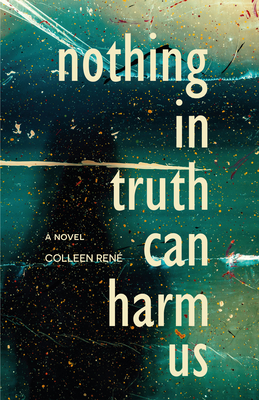
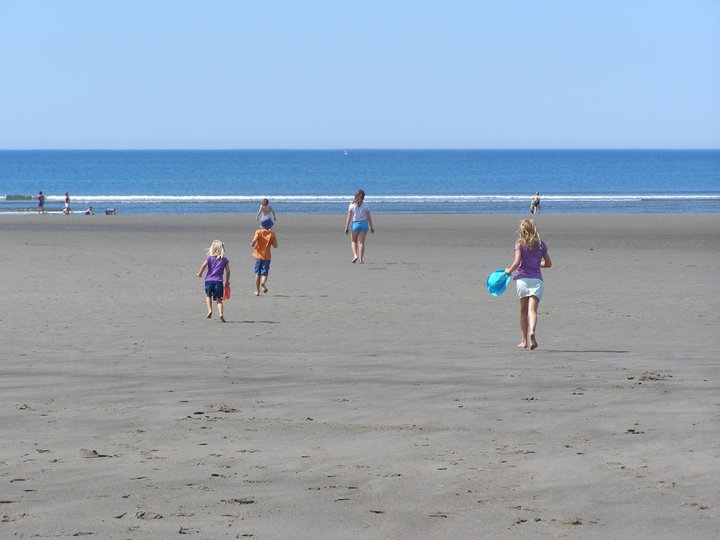
I was so happy to be back at Mavillette Beach, after Jennie Morrow took me there in her book Bird Shadows. Situated along the French Shore of Nova Scotia, I spent many summer days there, sometimes in the thick fog–so thick you couldn’t see the waterline from where you were sitting if the tide was out. The water was so cold that, in order to swim, I would enter the water a few inches at a time, letting each part of my body go numb before continuing. That way, I could eventually stay in for a while, yelling to my family that “the water’s nice once you get in!”
.
On the French Shore, the air was thick with salt. It felt as though it blew right through her and knew her insides. The dry, tall sea grass was sharp and when she ran her hands through it, it threatened to slice between her fingers and cut the webbing. She remembered the feeling. She’d been here before. Here, she had to be careful. The French Shore was her mom’s territory and she haunted everything.
Eva remembers a time when her mother would bring her here. After swimming, “her mother would wrap her in a rough towel and ruffle her hair until it no longer dripped. Her legs would lift and float up in the air as her mother picked her up and ran, flying her sideways on the shore and making the sounds of a car motor. And then they would lie down on a cool picnic blanket that her mother had made and stretch in the hot sun.”
But, “the good memories of her mother made her hate herself.”
Eighteen-year-old Eva has been living with her Aunt Mathilde since she was six years old, since her mother was sent to prison. Mathilde makes no secret of the fact that she believes Eva’s mother is a bad person, which is a cause of distress and confusion for Eva who has good memories of Gaby and still longs for her after all these years.
I felt so dirty for wanting her back, like my brain was wrong. I couldn’t see her the way other people saw her.
My mom used to make me these boxes. They had treats in them, little snacks. And she put them under my bed, so I’d have something to eat if I wasn’t allowed downstairs.
The story is told through multiple perspectives. Eva lives in a world of teenage angst and confusion, not knowing who she really is or where she fits in. Mathilde lives in a world of regret for the way her life turned out; she spends her evenings painting, drinking, and thinking about what her life might have been. Gaby only wants one thing – to reconnect with her daughter who she has never stopped loving.
She didn’t understand the words at first. They sounded clunky and backward. She thought she misheard him. But then they sank deep into her skin. ‘Ta fille ne veux pas t’parler.’ She felt as if her memories were being ripped out of her and lit on fire.
The tension in the narrative is high. The reader wonders who to trust. Gradually, over the course of the book, we learn the truth about what happened all those years ago.
Between the narrative structure, the compelling story, and the vivid settings, I couldn’t put this book down.
Thank you to Tidewater Press for sending me a copy of this book!
 Consumed by Ink
What a Spartan you are! The book sounds excellent, gripping enough to lose yourself in.
I can’t do it anymore… the water has to be a little bit warm. Too bad! 🙂
What a lovely looking beach! The book sounds good too.
I really loved this book!
It sounds very good. I loved the excerpts. That picture is beautiful!
I really hope this book gets some love!
They look like little birds in formation: and so tiny!
It’s like I can feel that towel rubbing up the drops of water.
My little birds have grown since then! 🙂
That beach looks so beautiful! And I’m very impressed that you push yourself into that cold water, you must really love swimming 🙂
I LOVED it. I still do, but I’m much wimpier about the cold water than I used to be. Lol
It’s amazing what cold water children will edure/enjoy. My daughter lives on the coast of the Southern Ocean, not Nova Scotia, but not warm either, not in winter, but you can’t keep her kids out of the water (I’m not so sure about fog!).
When I was little, I could stay in the water for hours. I’d come out all wrinkled like a prune!
These days, I’m more likely to swim in the Northumberland Straight, which is warmer than the Bay of Fundy (and warmer than the Atlantic Ocean on the other side).
Well, this has definitely got me intrigued!
Happy to hear it! 🙂