
Literary Wives is an on-line book group that examines the meaning and role of wife in different books. Four times a year, we post and discuss a book with this question in mind:
What does this book say about wives or about the experience of being a wife?
Don’t forget to check out the other members of Literary Wives to see what they have to say about the book!
- Kay at What Me Read
- Rebecca at Bookish Beck
- Kate at Books Are My Favourite and Best
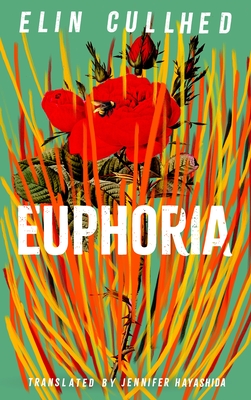
Goodreads synopsis: A woman’s life, erupting with brilliance and promise, is fissured by betrayal and the pressures of duty. What had once seemed a pastoral family idyll has become a trap, and she struggles between being the wife and mother she is bound to be and wanting to do and be so much more. The woman in question is Sylvia Plath in the final year of her life, reimagined in fictive form… As Plath’s marriage to Ted Hughes unravels through the heady days of their first summer in Devon together, Sylvia turns increasingly to writing to express her pain and loss, yet also her resilience and power. She has decided to die, but the art she creates in her final weeks will set her name, and the world, ablaze.
Warning: Spoilers ahead!
I can no longer think about Sylvia Plath’s death without remembering what I read in Talking to Strangers by Malcolm Gladwell about the suicide rates in England in the 1960s; almost half of all suicides took place in the privacy of their own homes due to the poisonous gas supply to their ovens, supplying a convenient way to end things. Over the next decade, gas supplies were gradually changed to a non-poisonous gas and suicide rates dropped by almost half. Gladwell suggests that the “the desire needs to be ‘coupled’ with opportunity to do so easily.” (Literary Review of Canada) Which leads me to wonder if Plath could have been saved had they lived elsewhere. Or, to connect the idea with our purpose in reading this book, if Plath’s experience as a wife and mother had been a more positive one, might she have pulled out of her depression before it got bad enough that she chose to end her life by a relatively easy and private method?
“God, I feel so good now, now when I am going to die. I see everything more clearly than ever before. I should always live to die…”
What does this book say about wives or about the experience of being a wife?
Sylvia Plath’s experience as a wife in the year depicted in the novel is a roller-coaster ride. She seems to hate her husband yet still be infatuated with him: “It was our war, I couldn’t live without it. It was something that sustained us both.” She’s definitely jealous: she envies the amount of time he has to work on his writing as well as how easy it is for him to just slip away and forget about everything else that needs doing. She’s also jealous when another woman is around, covetous of Ted’s time and attention. And then, of course, there are increasing signs of his infidelity with Assia.
“… to bear his children is my only way to surround him, tame him as he has tamed me.”
Sylvia finds the kids a lot of work and doesn’t get the support she needs from Ted. This is an old story and still as common as the hills, but that doesn’t make it any less relevant. For Sylvia and Ted, there is an added layer of celebrity; they are both published writers and are known in literary circles. This might add another level of pressure to get more writing done, causing a shift from being supportive of each other to being more competitive.
“Ted was a man: he could vanish upstairs to the little attic room and write as he wanted. I was public property, I was material. I was woman. Me, they wanted to capture.”
There are also signs of Ted’s verbal abuse; Sylvia mentions that he hissed in her ear that “it would be easier if you were dead.” Ted also lays the blame on Sylvia during their arguments, telling her she’s “mad” and a “fascist,” planting seeds of doubt as to who is at fault.
“If I could I would always change what was me, my actions, what I did, how I appeared to the world.”
I will end by saying that, in this novel–separate from what we might already know about Sylvia Plath and Ted Hughes–it’s hard to know for sure what the truth of their marriage actually is since the narration is coming from the lens of someone who is jealous and depressed. What is the truth and what is only perceived to be the truth? Either way, Sylvia did not receive the support she needed from Ted, practically or emotionally.
“What was it that made me feel so dead in my chest.”
Euphoria is a sad novel, even more so knowing it is based on real people.
Join us in March 2025 for (hopefully) something a little less sad: Lessons in Chemistry by Bonnie Garmus!
 Consumed by Ink
I fear that lack of support was only too common in the 1960s, but I also sensed the competitiveness coming from Ted. I wonder if maybe he moved the family out into the country so that he could have London by himself. That thought just occurred to me.
I hadn’t thought of that, either, Kay!
I have had a couple of friends who are Plath-obsessed, so I would look at this one with particular interest…but, then, would probably pass it by. I did read her journals several years ago though, a real doorstopper of a volume that I had thought might be rather dry but turned out to be really interesting (mostly bookish bits), so…maybe? Did it make you want to read more about/by Plath? (Thanks for the spoiler warning. Even though I haven’t read it, I read everything here because I do know how it ends.)
While reading the book, I looked up a few articles on Ted and Sylvia to get more context for the novel – I didn’t actually know very much about them beyond the marriage and suicide. I also wanted to know more about Assia and her daughter – a whole other sad story. But, no, I’m not looking for more to read about Plath. Not now, anyway.
It does sound really sad. Did the writing quality keep you going or did you finish it because it was for the book group? Or maybe you finish everything you start reading?
It was a good book and well-written. I probably wouldn’t have picked it up if not for this group, but I’m not sorry to have read it. Some parts were quite striking.
Wow, that’s an arresting statistic about English suicides in the 1960s. For obvious reasons, I was interested in the Anglo-American angle here, and wondered what her life would have been like if they’d lived in the USA together rather than her having to be far from family.
Or anywhere where there were more people around. But the US would have been without the convenient gas-oven suicide path.
Kay wondered if Ted took them out to the country intentionally, so he could have the London life to himself when he went to visit. I’m not sure if he was that intentional about his actions, though.
Wow, this seems like a very heavy book. Understandably so, but knowing it’s based on real people does make it seem darker somehow. I can’t imagine how difficult it was back then to be a woman with any kind of career aspirations. The world just didn’t care, so it would take a very special man to go against the quota and give his wife time to work away from the family. As you said, women not getting enough help from men is a well-worn tale, and it still exists to this day…
The book itself and the way it is written doesn’t feel too heavy – but when I considered the story and that these are real people, it made me feel really sad. The book actually seems to end on a hopeful note.