

A big thank you to Rebecca and Cathy for hosting Novellas in November again this year. It’s a fun way to sneak in some short books that might otherwise be overlooked or forgotten about. (Many of the novellas I read this year came through my library’s interlibrary loan department. #loveyourlibrary) Novellas allow me to fit in back-listed books as well as ones from authors I’ve never read before. This year’s selection features an unlikely love story, watery graves, a watery obsession, a tongue-less man, astronauts, and a rabbi with a tender heart.
The Dirty Milkman by Jerrod Edson (2005) Oberon Press
I recently read (and reviewed) Jerrod Edson’s most recent novel, The Boulevard, which I found to be delightfully weird. I enjoyed it enough that I was curious about his other books, not even sure if I would be able to find them through my library. I was happy to discover that Halifax had a copy of this one. Who wouldn’t want to read a book called The Dirty Milkman?
You could argue that the milkman–Charlie–is dirty. But really he’s a disappointed-in-life and troubled young man who makes a “dirty” mistake. A big one, yes. But I couldn’t help but feel for him throughout the whole book despite his bad behaviour and poor judgment in many (pretty much all) aspects of his current life.
“… it felt as if life had swept him under the rug and there he was with the dust and dirt.”
Much worse is his neighbour Murray who thinks he picked up crabs from the Chinese buffet restaurant and who came up with the “dirty” idea in the first place, convincing Charlie to go along with it. Of course Charlie should not have. Of course.
“… the guilt was an ache, an awful, hollow ache that consumed him like a pride of lions on a carcass, eating with each passing second, tearing at him and ripping him to pieces from the inside out.”
Despite everything, Prin–the young lady of the story–seems to have a soft spot for Charlie, and Charlie can’t get Prin out of his head. Both have issues. Especially Charlie. But both are filled with potential. The reader can’t help but root for them.
Underneath all the strangeness and sadness and drunkenness and dirtiness, I thought this was a sweet story of two lost souls who found each other, even if just for the moment.

The Moon is Real by Jerrod Edson (2016) Urban Farmhouse Press
How could I resist The Moon is Real when it promises a reunion of the characters in The Dirty Milkman? Even though there is an eleven year gap in the publishing of the two books, there is only a 5-6 year gap between stories. And, indeed, there is a satisfying reunion between the characters. However, that is not the main focus of the book. In fact, I would say the recurring characters aren’t even needed in this book, but it’s nice to see them all the same.
Alternating narratives come together to tell the story of Eddie and the hit men who are out to get him; Uncle Walter recounts the sad story of Eddie’s childhood, while the Montreal hit men tour the city of Saint John and Eddie’s friend Jeremy helps orchestrate an ingenious plan to save Eddie’s life. If only it had been thought through just a tiny bit better…
It’s hard to know whether Edson’s books are meant to be comedic or cautionary tales, but I know I have fun reading them.

Oatcakes and Courage by Joyce Grant-Smith (2013) Quattro Books
Surprisingly, I didn’t take any notes while reading this book and now it’s due back at the library, so I have to be quick. This is a story, set in 1773, about a young woman who is running away from her home in Scotland to get away from the awful man her father wants her to marry. Along with a friend who goes with her, they end up on the Hector – a ship carrying Scottish settlers to the new colony in Pictou, Nova Scotia. Most of the action takes place aboard the ship during the long and arduous trip across the Atlantic. There’s seasickness, small pox, storms, death, filth, and near starvation by the time they make landfall. But there’s also generosity, love, and a sense of community that will serve them well once they get to where they’re going. Worth a read if you’re interested in local history and/or stories of the sea.
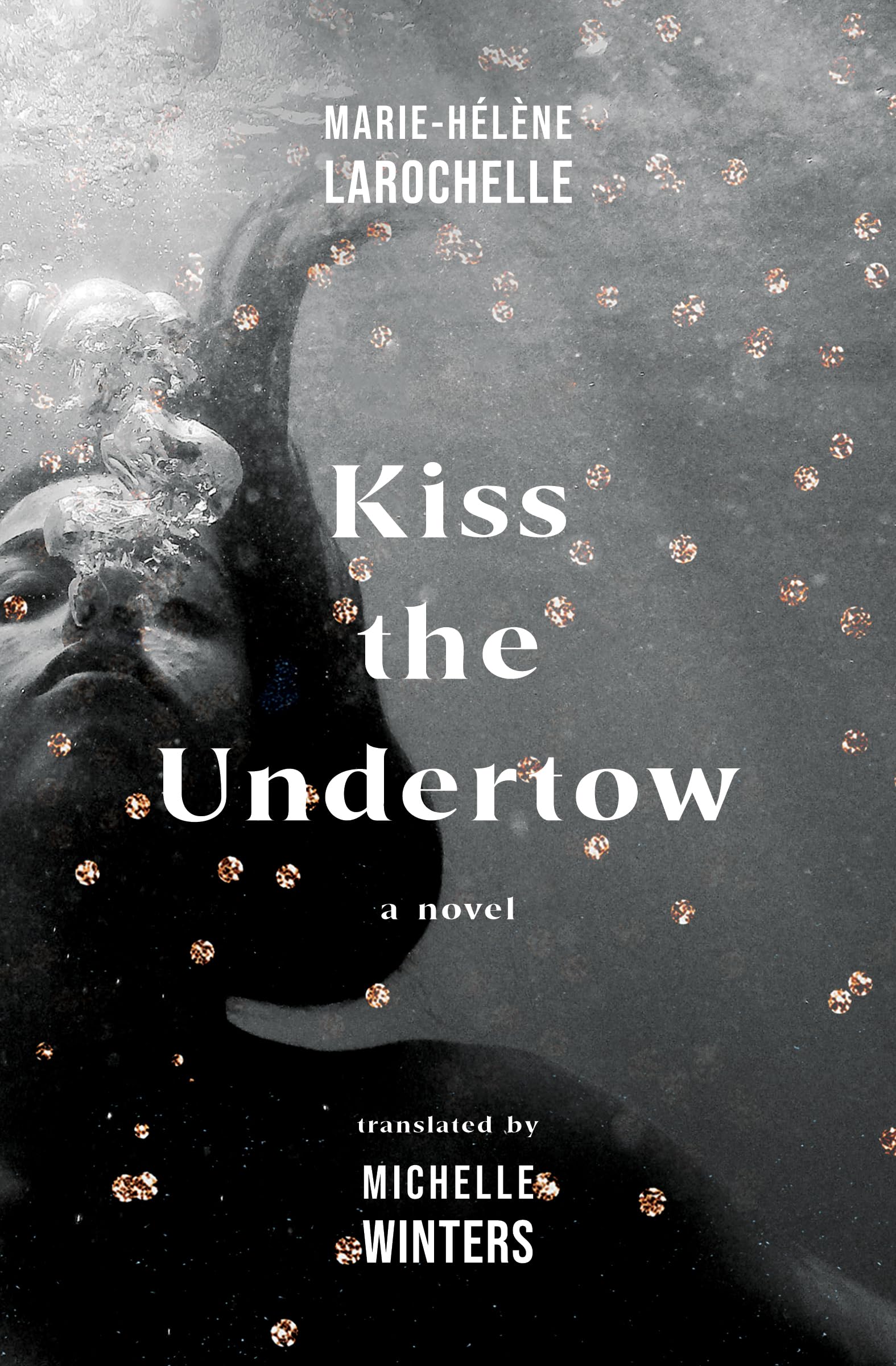
Kiss the Undertow by Marie-Helene Larochelle, translated by Michelle Winters (House of Anansi Press)
When I learned this book was about a swimmer and translated by Michelle Winters (whose first book I loved – I hadn’t read her second one yet), I was determined to read it. My library really came through for me on this one and brought it in all the way from Saskatchewan. (Hooray for libraries!)
The unnamed narrator is a university-aged swimmer who spends most of her time either in the water or thinking about the water or hanging out with the other swim-team members. As a group, they behave recklessly, perhaps as a way to feel some kind of freedom from their extremely rigid schedules. Our narrator, in particular, is hard on her body, in and out of the pool. I wanted to know why. But the book is focused on the moment: how she is feeling and thinking right now; her thoughts don’t drift to the past or the future. All we know is that she is a swimmer who takes courses at the university and she desperately wants to be chosen to go on the trip to France with the swim team. Badly enough to allow abuse from the team doctor in exchange for his silence about her newly-discovered medical condition.
This book sucked me right in and I read through it quickly. Larochelle’s writing places you in the narrator’s body; you can feel her pain, her numbness, her pleasure, her exhaustion. It’s dark and dismal but beautifully written and disturbingly compelling.
“My body knows the routine: I grudgingly pull the door handle and the antiseptic air swooshes past, I crane my neck, rip out hair putting on my cap, rotate my shoulders and arms, stretch my calves, force my goggles into my eye sockets, flex, pose, dive. / You swim to the end of your breath, of your strength, then go farther; you delight in your pain, the water is your nemesis and ally.”
“I take up the final sprint furiously, a violent juddering in my guts. I slap the edge and pull myself up to puke in the drain. Thick bile hangs from my lips and I can’t catch my breath. My mouth fills with a sour saliva I can’t seem to spit out. A second surge of nausea wells up and I’m too spent to cough out the stream coming out my nose and mouth. I rest my cheek against the edge, bobbing in my own phlegm.”
“The water slurps my shoulders, torso, and back in a big, wet kiss, bending my image into an ironic clone of the truth. I bow to its dominance and let it break me open. The water alone will have me.”
“I just keep going, contaminating the pool with my base fluids, like I’ve done so many times before. Whether it’s snot, piss, vomit, the water is always there, diluting me, digesting us like drowned corpses.”
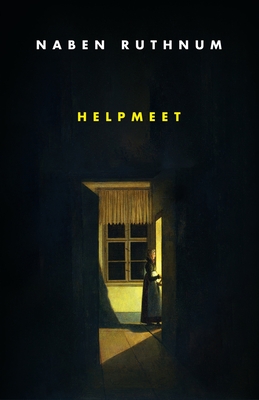
Helpmeet by Naben Ruthnum (Undertow Publications)
I’ve been wanting to read something by Naben Ruthnum for some time now and thought this 89-page novella was a good way to fit him in.
I got what I was hoping for: a strange, horrifying read. It’s 1900 and Louise is faithfully nursing her unfaithful husband who is literally falling apart. Why she is so devoted to him is anyone’s guess because he was not a good husband. But, as a prominent surgeon, I suppose he was a safe and comfortable choice. Surgeon or not, he is now falling apart and no one knows why. His brain is still working, though, so he is fully aware of the deterioration of his body, including the moment when his tongue falls out and lands on the floor.
This book is very weird, but also well-written. Ruthnum is good at creating an atmosphere of horror. I will leave you with a passage that’s not quite as gruesome as some: “He didn’t have eyes to open, but when Louise glanced at him in the dim light of the coals, Edward was looking at her. He emulated looking from behind the gauze coverlet he wore over his face at all times, through which Louise could see his eye sockets, full of white cotton batting… When Edward looked at Louise, he mimed a man looking: he inclined his head, pushed his chin forward–he still had a chin, his chin still had its skin–and pretended he was a man with a face, facing his wife.”
[Note: This is the second book I read within a month that involved a man trying to talk without a tongue. The other was in Bury Your Gays by Chuck Tingle. This little coincidence is for Rebecca who likes to keep track of these things.]
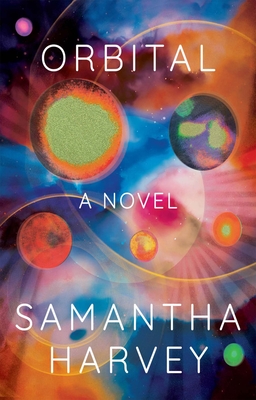
Orbital by Samantha Harvey
I had no idea what this book was about or why I had originally put it on my list (at this point, it’s on everyone’s list!), but I loved it. Orbital tells the story of a day in the life of six astronauts at the space station. The prose is beautiful, and because it’s so descriptive, I came away with a surprisingly good sense of what it might be like to be up there. I felt the annoyance of zero gravity (before this, I thought it might be cool, but I’ve changed my mind); I felt the awe of being able to see earth from afar; I felt mind-blown over the fact that they watch the earth go around 26 times each day; I felt their longing for people back home, but still couldn’t understand their desire to be there more than anything else in the world. I guess that’s why they are there and I am not. I have never felt envious of astronaut food, either – I think it would be awful. I had no idea that astronauts have to work out every day to keep their muscles toned so they don’t collapse when they get back to earth. This book is probably the closest I’ll ever get to feeling like an astronaut. It was very cool.
“Sometimes they wish for a cold, stiff wind, blustery rain, autumn leaves, reddened fingers, muddy legs, a curious dog, a startled rabbit, a leaping sudden deer, a puddle in a pothole, soaked feet, a slight hill, a fellow runner, a shaft of sun. Sometimes they just succumb to the uneventful windless humming of their sealed spacecraft. While they run, while they cycle, while they push and press, the continents and oceans fall away beneath…”
“Before long, for all of them, a desire takes hold. It’s the desire – no, the need (fuelled by fervour) – to protect this huge yet tiny earth. This thing of such miraculous and bizarre loveliness. The thing that is, given the poor choice of alternatives, so unmistakably home… They’re humans with a godly view and that’s the blessing and also the curse.”
“There’s the first dumbfounding view of earth, a hunk of tourmaline, no a cantaloupe, an eye, lilac orange almond mauve white magenta bruised textured shellac-ed splendour.”
“An intoxication; the height-sick homesick drug of space. The simultaneous not wanting to be here and always wanting to be here, the heart scraped hollow with craving, which is not emptiness in the least, more the knowledge of how fillable he is. The sights from orbit do this; they make a billowing kite of you, given shape and loftiness by all that you aren’t.”
“With each sunrise nothing is diminished or lost and every single one staggers them. Every single time that blade of light cracks open and the sun explodes from it, a momentary immaculate star, then spills its light like a pail upended, and floods the earth, every time night becomes day in a matter of a minute, every time the earth dips through space like a creature diving and finds another day, day after day after day from the depth of space, a day every ninety minutes, every day brand new and of infinite supply, it staggers them.”

In Sickness and in Health by Nora Gold (Guernica Editions)
The structure and writing style of this novella captured me right away. It’s written in second person and chronicles each day for five consecutive days – Saturday to Wednesday. Except on Wednesday, the narrator switches to first person.
Lily is sick and has been sick on and off for a while now, at least one week out of every month. And the doctors don’t know what is wrong, which makes her feel completely helpless.
“Sickness is a foreign country. You are lost there, you don’t know the language, no matter how many times you’ve visited before. You’re alone, but a different kind of alone than usual, because when you’re sick, you don’t have yourself. Your own body has turned against you…”
Lily feels as though the doctors don’t believe her, she’s worried about her husband spending so much time with his secretary while Lily is laid up in bed, and she will lose her job if she is not back at work by Wednesday. But she is helpless to control the outcome of anything and worries that she’ll never be better again.
Lying in bed, she has a lot of time for reflecting on her life, and the reader soon discovers this story is about more than just illness.
Yom Kippur in a Gym by Nora Gold (Guernica Editions)
Gold’s second novella takes place in a gym during Yom Kippur, just as the title indicates. In this story, the reader has access to the inner lives of several of the people in the gym, who are all struggling in some way with grief, pain, or illness. There’s a man who can’t stop thinking about how much he hates his father; a woman in denial of her husband’s recent Parkinson’s diagnosis; a failed artist; a man who doesn’t feel like he deserves to live; and the rabbi himself.
“His skinny heart swells with aching passion for his people, and for this whole, sad, troubled, unredeemed world. He feels his heart expanding and straining inside his rib cage, pressing relentlessly against his chest. He’s sure he is going to crack right open. He cannot contain all this longing and love.”
Despite their inner turmoil, they are present at Yom Kippur, and brought closer together by an unexpected crisis.
In both of Gold’s novellas, I loved being inside her characters’ heads, listening in, rooting for them as they tried to pull themselves together.

Have your read any novellas lately? Have you made any new discoveries? Read any back-listed books from authors you’ve already encountered?
 Consumed by Ink
Outcakes and Courage was one of the first books I reviewed for The Miramichi Reader. I also reviewed The Moon is Real, and that review can be found at The Seaboard Review. Great novellas both.
I remember seeing your review of The Moon is Real, but I can’t remember if you had also read The Dirty Milkman (which I liked even more)?
No, I had never read that one.
Seems like several people read Orbital. I have to read it for one of my projects, but I haven’t done it yet.
I mean several people read it for NovNov, of course.
It’s short, so I imagine you won’t have much trouble fitting it in!
No, as soon as I get done with my A Century of Books (not too long, I hope!), I’ll get back to my other projects and just some everyday reading from my pile.
I can’t comment on the novellas, but I have been a milkman and a swimmer; and I meant to read Orbital when it was shortlisted for this year’s UK Le Guin Prize. But I’d like to comment on “long and arduous trip across the Atlantic” – to get to Australia in a sailing ship from Britain you would cross the Atlantic to Brazil, cross it a second time to Capetown, and then cross the Indian Ocean and the Southern Ocean in the winds and high seas of the roaring forties.
By the time they got to Australia, they would have all been dead!
I was thinking of both you and Marcie when I read Orbital – you better get on it! Lol
You’ve had a great Novella November, Naomi. There’s not one from your list I wouldn’t read but, aside from Orbital which is already on my list, it’s the two by Nora Gold that most appeal.
I found Gold’s novellas distinctive – you can’t go wrong reading them!
You’ve read so many novellas! Well done! And they all sound interesting. I started Orbital but didn’t finish it. The prose was beautifully written but the story didn’t grab me.
Thanks, Laila! I was surprised by how much I liked Orbital. I guess I had an unknown hankering to know what it would be like to view the earth from space. Lol
I read a novella in November, but it was pretty much by accident. A friend was kind enough to send scans and photocopies of the scarce 1950 pulp The Gorilla’s Daughter by Ontario boy Thomas P. Kelley. It wasn’t until I received them that I learned the book – all of 160 pages – also features a thirty-page science fiction story, ‘Awaken the Dead’ by Halls Wells.
Neither are recommended, which is not to say I regret reading them, particularly given the book’s notoriety.
That sounds like it would have been an interesting read. Thanks for sharing! 🙂
Thanks so much for joining us, including for the buddy read. I love the variety that the novella form encompasses; your post is a good example! From your selections I’m keen on Kiss the Undertow and Nora Gold’s books, which Marcie also mentioned.
Good choices. I would read more from both authors!
I love the variety! Thanks for hosting, Rebecca! 🙂
I can’t remember who just reviewed the Nora Gold books – or did you mention them in an earlier post? In Sickness and in Health really interested me. Perhaps it was Marcie from BIP?
The quotes you included from Kiss the Undertow were so visceral. I think student athletes are incredible, they have to be so dedicated!
Yes, it was Marcie. 🙂
I was actually so glad when my daughter decided not to play university volleyball. She would have been way too busy. The girl in Kiss the Undertow was disturbingly devoted.
sports can definitely have that affect on some people…
What a great round up Naomi! I love the sound of the Jerrod Edson.
I have been having a lot of fun reading Jerrod Edson’s backlisted books!
Thanks for hosting, Cathy! 🙂
We’ve chatted about the Nora Golds and the Samantha Harvey; I haven’t read any of the others. But I always like Oberon’s books, such good authors, reliably literary works of quality. And you know I loved Michelle Winter’s first book too! (What is it about swimming stories?! They seem to be everywhere ATM.) As for other backlisted books from previously enjoyed authors? I guess my Jean Rhys reading a few months ago would count; I had read a couple of her books (the famous ones) but went back to read the earlier ones and really enjoyed them too. But mostly I’ve been super distracted by newer books this year. Not that that ever happens to you. hee hee
I love it when I make the time to read an author’s backlist – I like to compare them with each other. I *should* do it more often. Ha!
I have noticed that about swimming stories, too. I finally read one! I’m also distracted by books at the library that have swimmers on the cover – they are sooo tempting. I wonder why? (I mean, besides the fact that I like to swim…)