

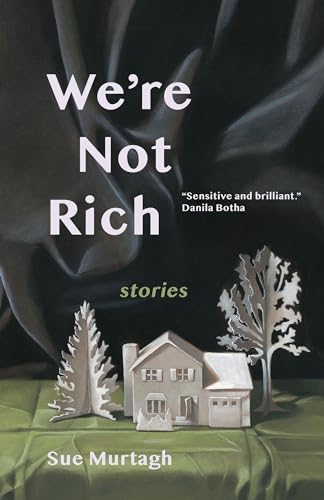
We’re Not Rich by Sue Murtagh (Nimbus Publishing)
I loved this debut collection and wrote about it for The Seaboard Review earlier this year. Below is a short excerpt of my review. You can read the rest of it here.
As many of my favourite story collections do, We’re Not Rich examines the lives of ordinary people grappling with the stuff life throws at us: illness, aging, loss, and relationship troubles. Murtagh adds in some timely topics as well, like the housing crisis and the Hammonds Plains forest fires. Relatable characters, astute observations, and the use of humour make We’re Not Rich hard to put down. I was always looking forward to the next story...
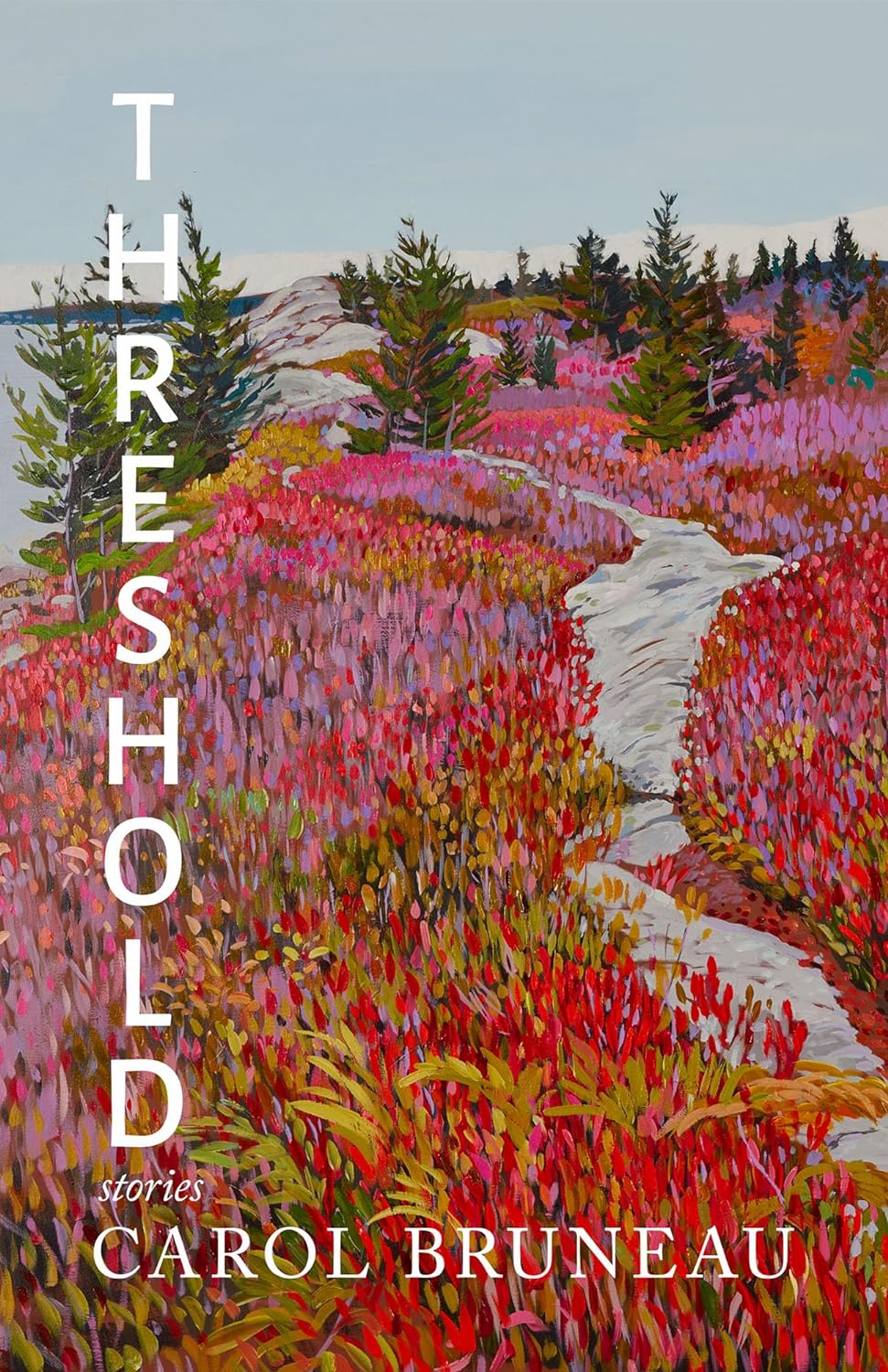
Threshold by Carol Bruneau (Nimbus Publishing)
Nominated for the 2025 Thomas Raddall Atlantic Fiction Award
I am a long time admirer of Carol Bruneau’s work and have written about her books here, here, here, and here. Threshold upholds Bruneau’s talent for thoughtful stories written with empathy, humour, and attention to detail.
In This Talk of Trees, a jealous man strips the bark off trees in Halifax’s Public Gardens to spite his partner who, he believes, loves the trees more than she loves him. The story is told from the perspectives of the man, the woman, and the trees. “We were just standing there, you know, doing what we do. Taking a breather after a quietly busy day, a regular day. Reaching upward. Breathing in, breathing out. Growing, taking things as they come. Hoping to catch a few winks. Sitting ducks, maybe that’s what we were?”
In Faith Healer, Carl breaks Covid rules to take his elderly mother to a faith healer. When she comes down with the virus, he re-thinks his priorities. “Do not fear! Nor should you run from the sickness. This vi-rus. For it is the Lord’s will… His will when innocent folks sicken and die. It is not up to the gubbermint now is it? To dictate who shalt live and who shalt die. Mark my words, friends, the gubbermint is Satan in a spiffy suit and tie waitin’ behind your computer screen. Doing all he can to drive a wedge–a WEDGE, I say–between you and the Almighty.”
When a woman is pushed into the river in More Fish in the Sea, she morphs into a trout. Short, snappy, and surprising. “Getting thrown in was not how I ever imagined getting dumped. A splash of red (a dying sprig of huckleberry?), eddying light, a crow’s squawk: these were my last ties with you and your world. All were cut, washed away the instant I slipped under the November current, somersaulted over rocks and rapids rushing to suck the air from my lungs and between my ears. The burbling mimicked the engine of your souped-up Civic back in the clearing.”
Other stories in the collection include: a wayward son comes home after being away for twenty years; a woman’s grief causes her to see the ghost of her mother; a couple strikes a deal: the woman gets a dog if she gives her partner a baby; newlyweds get separated at the Halifax port of a cruise when one of them gets sidetracked by the story of the Mary Celeste; a woman steals scrubby trees from provincial property to hide the sight of a pile of brush in her neighbour’s yard; and a widow has supper on the ocean floor as part of her bucket list.
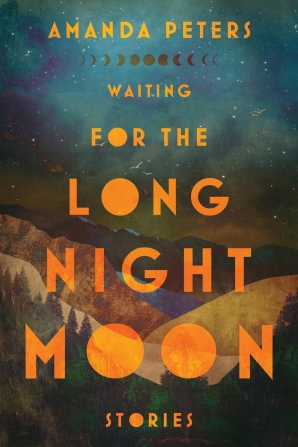
Waiting for the Long Night Moon by Amanda Peters (HarperCollins)
Nominated for the 2025 Alistair MacLeod Award for Short Fiction
Long Night Moon is the debut story collection of the author of The Berry Pickers.
What struck me about this collection was how Peters is able to convey ways of life and traditions, hardships and injustices of First Nations people through story, without the excessive use of exposition, allowing a deeper understanding of the characters’ lives.
Peters includes a warning for readers as these stories contain painful themes and topics like racism, abuse, residential schools, and addiction. The author manages to balance this nicely with hope, humour, resilience, and strength.
Some of these stories are joyful, while others are painful. Some are about colonialism, while others are about connection to land and people. Some are historical and some are contemporary. A wide variety of time and place, subject, and theme. Written in a hypnotic prose that makes for effortless reading.
In Tiny Birds and Terrorists, a young woman is led into the forest by her grandfather to help her grieve the loss of her baby. “Let the trees hear you wail, let the river sweep it away, let the tree moss absorb it all.”
In Three Billion Heartbeats, a girl goes to the city for school and her mother worries she won’t come home. “They think people get lost in the woods, but it ain’t true. People get lost in cities.”
In Waiting For the Long Night Moon, an old man lives alone in the woods remembering his sister and how she never returned home. “It’s quiet out here except for the sounds we were meant to hear. The wind through the trees sings its songs in the voice of my mother. The roar of summer thunder bouncing off the lake is my father’s booming laugh. Only the sound of the coyote causes me to tremble. It’s the sound my sister made when they took her words, replacing them with their own.”
In Homecoming, a boy returns home from residential school after being away for eleven years. “I thought we would turn back, and I would get t tell her about jumping over waves and the taste of salt water on my lips. But we didn’t turn back. I watched, my eyes narrowed, searching as the figure of my mother faded into the trees behind her. I’ve been practising my story every day since–the story of the waves and the way the water turned my summer skin white with salt. I used to practise in her words, but now I can’t find them. I’ve waited so long to tell her.”
In In the Name of God, a boy at school is kept in the cupboard for several days for asking an innocent question about God. “Her face turns purple like the radish we grow in the gardens but never get to eat… Her mouth turns down at the edges and the wrinkles around them deepen. When she’s angry like this, Thomas says you could drive a tractor through them.”
Other stories include: a child’s view of the first settlers on their land; a man in a diner overhears a racist conversation; a foster girl runs away from a stable home to look for her mother in Montreal; a girl assists with her first birth at a birthing tree; a man goes to town to find out the truth about what happened to his uncle; and a mother watches her daughter dancing for the first time in the beaded dress she made for her.

In the Shadow of Crows by M.V. Feehan (Baraka Books)
The stories and characters in this collection are connected by the small town of St. Anne’s in Cape Breton, Nova Scotia, beginning and ending at the Hart’s Crossing train station. The times range from 1924 to 2025, and include a woman coming to live in St. Anne’s as a girl, through to the war, her marriage, and her husband’s death. The eight stories follow the poem, “One for sorrow, two for joy / three for a message, four for a boy / five for silver, six for gold / seven for s secret never to be told,” plus one more called “In the Shadow of Crows.” And the cover image is Alex Colville’s “Seven Crows.”
“”I love you I love you I love you,” she whispered repeatedly in his ear. Beside them, the crow he’d watched earlier–flapping like a black rag between him and the world outside–flew through his room to the inside ledge of his window. She paused on the sill for a moment before the youngest nurse chased her from the solemn event. Emmet knew she headed for shore and he envied her that. He’d read somewhere there is no place on earth without crows. ‘All they’ve witnessed,’ he thought as he exhaled, ‘from their perch in the trees and their flying above us, and their gathering of crumbs that we toss from a lifetime; maybe, in the end, they’ll take me, too.’“
The weaving together of all the elements of these stories is excellently done and beautiful to read; a little gem that anyone interested in the short story form should seek out.
A favourite line: “The warm smoke moved through the rooms of his body like it was home.”

The Art of Forgiveness by Chris Benjamin (Galleon Books)
Chris Benjamin is another author whose books I’ve been reading and reviewing here for years. You can find them here, here, and here.
The stories in The Art of Forgiveness are divided into three sections, one section for each of the main characters: Gerry, Long, and Drew. The three boys, a hard-scrabble group of kids, are growing up in the 80s and 90s suburbs of Halifax and appear in and out of each other’s stories. They are learning to navigate–together and apart–the world of adolescence as it is without a consistent, stable parental presence in their lives – they need to count on each other to help get through the tough times. And tough times there are: together, they suffer from adolescent hormones, loss of loved ones, and the tragic consequences of drug trafficking. Benjamin’s writing shows the sympathy and compassion he feels for his characters and the reader comes away with hope for their future.
Gerry: “What happened there was nothing. Gerry’s father said that was why he planted flowers every spring; their blossoming was one thing to look forward to. Gerry knew it was really atonement for not appreciating his mother when she had been there. But his father was right about the nothing–the nothing of 50 television channels, including the listings channel. Nothing was old movies and new video games and school and the weekday paper route. Nothing used to be Friday night Yahtzee games with best friends number one and two, Drew and Long. When they weren’t around, nothing was damming the stream behind Grif’s house with rocks and stick and mud. Nothing was better then, before it involved trying not to feel things.”
Long: “Long’s father was universally loved. Even the sisters who wanted all his money affectionately called him their little bandit. When Long opened his mouth to request clarification from his mother, a howling animal sound emerged. The cat thrust its face into his, its purr urging him to settle, accept the ferocity of its devotion. Long, his siblings and his mother huddled together, crying and wailing, as the cat tried to squeeze its way between them.”
Drew: “His mother’s silence was an act of great patience, a genius-in-simplicity trap. Her closed-mouth discipline spun his molecules so his internal organs slammed against his skin. You can’t counter that kind of quiet with your own. You have to announce, confess, lay down your burden, unleash horrible secrets you instinctively want to hide. He hadn’t planned on mentioning quitting his job, or trying standup comedy; he wasn’t even sure whether he was serious or just dizzy from workplace chemicals and hanging on a suspect fire escape. But she’d whiffed something through the phone. The more he said, the thicker her silence. Nonsense spilled from his mouth.”

Have you been reading any short stories lately?
 Consumed by Ink
Threshold is one book I am really looking forward to.
I hope you love it!
Thanks, Naomi.
(For some reason, my profile no longer shows.)
Waiting for the Long Moon sounds like a really interesting collection! I am hoping to read Liberation Day by George Saunders this month.
I still have yet to read one of George Saunders books. Enjoy!
These all sound great, though I think the Bruneau is the one that most appeals. I remember you covering her books before.
I tend not to read short story collections through the year, instead cramming them into September, but I’ve actually put four works of short fiction on my 20 Books of Summer pile, so we’ll see if I get to them!
Do you make a short story collection list the rest of the year or do you just wing it when September comes?
September will be here soon! Maybe you could leave the story collections on your summer list until late August. 😉
I have a whole shelf full of short story collections! So I usually try to get to as many of those as I can in September, sometimes also reading a few from the library or my Kindle. This is just a personal project I’ve done for 5 years or so, but Lisa of ANZ LitLovers is making Short Story September a more official thing this year (but inviting people to feature individual stories).
I’m slowly reading my way across Canada, though I still haven’t made it to the Atlantic coast except for LM Montgomery (and of course the most recent of hers I read, The Blue Castle, is set in Ontario).
Of these collections the one that sounds the most interesting is Amanda Peters’, though I also like the sound of the way The Art of Forgiveness is structured.
I’ll be very interested to see which books you choose when you make it to Atlantic Canada! 🙂
I’ve been curious about Amanda Peters, I didn’t realize she was Indigenous herself? I know she used to be married to Joseph Boyden at one point, but I don’t believe they are together anymore. Should I start with her novel instead of her short stories do you think?
I think you’re thinking of another Amanda… This one was never married to Boyden and lives in Nova Scotia’s Annapolis Valley.
I don’t think it matters which book you start with–they’re both good!–but I would personally recommend her novel over her story collection.
Ok yes I’m definitely thinking of a different Amanda! haha
Waiting for the Long Night Moon appeals to me most here, though I’m not a massive short story reader. It’s very expensive here so I’ll have to hope it comes out in a cheaper edition at some stage. Thank you for sharing these interesting books.
Fingers crossed it becomes more accessible! Thanks for reading, Liz!
It takes me forever to read a short story collection! I usually lose steam somewhere after the third or fourth story. Then I’ll either abandon it or get sick of having it on my “currently reading” and just power through it! Ha ha!
That happens to me, too, sometimes. Or sometimes, I plan to read one a day but they’re too good and I keep on going! It partly depends on my mood. 🙂
These all sound worthwhile (and we’ve chatted about the Bruneau collection previously) but I’m especially interested in the collection from Baraka. It sounds like just the kind of careful eye and thoughtful structure that I really enjoy! My short story reading has been all over the place recently. I’m just about to finish the Spring Quarterly post, but I have been reading in bits and pieces over so many collections, and not finishing many of those collections, that it’s felt like a strange year for stories for me.
I think you’d really like Feehan! I’ll message you about it!