


I confess that I almost missed Margaret Atwood Reading Month this year. I remembered it in September and October, but it wasn’t until November 15th that I realized it was November at all and that MARM had been going on already for a full two weeks. But I was determined not to miss it, so here I am.
I knew I didn’t have time to read a whole book, so I pulled out my copy of Burning Questions and scanned for an essay that caught my eye. It didn’t take me long to choose; “How To Change the World” jumped out at me right away. My youngest daughter, who is now in her second year of university, is always declaring that she wants to save the world. As her mother, I worry she’s taking on too much responsibility for one young person; a person can’t save the world all by themselves. Or can they? Maybe Atwood’s essay could give a concerned mother some insight.
“Surely we–we as tiny, puny individuals–do not overestimate our own capabilities to that extent. [Unless we are idealistic university students.] We don’t feel that we, personally, have the power to change the world, and even if we did have such power, in our saner moments we know that we lack the wisdom. If each of us were to be given the magic wand that would fulfill our every command, would we choose those commands well? Or, as in most folk tales that involve wishes, would we choose disastrously?”
This idea interests me, and ties in with MA’s discussion at the beginning of the essay about how we define things: What do we mean by “change the world?” As Marcie points out in one of her weekly check-ins, the first thing MA raises is term definition: “her positioning of the need for clarity makes it clear that these are the kind of essential conversations that we need to have more often. It reminded me that, even when we think we are communicating, we aren’t meaning the same thing when we utter even commonly used words let alone when we discuss complicated ideas.”
What does my daughter mean when she says she wants to save the world? Does our own idea of making the world ‘better’ align with others’ idea of ‘better’? Does “better for some always mean worse for others” or are there “some forms of positively intended change that make things better for everyone?” Let’s hope so, for everyone’s sake.
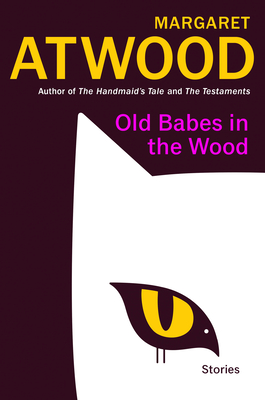
I wonder if MA had this essay still percolating inside her head around the time when she wrote the story “My Evil Mother” from Old Babes in the Woods? The story begins with the teen daughter calling her mother evil and the mother calling into question the definition of the term: “Yes, I’m evil, as others might define that term. But I use my evil powers only for good.” And, in the very next paragraph, the daughter comes back with, “Anyway, who gets to say what’s good?”
Marcie’s thoughts on “My Evil Mother” intrigued me enough to go searching for my own copy of Old Babes, and what a wickedly funny story it is. (On my blog, I get to say what’s good!) Marcie talks about expectations and disappointments, lies and omissions, and the power of humour. It is the humour that I love and that keeps me going back. The humour is front and centre in this story, but I will read any of her work looking for a witty comment here or a sly observation there. The mother in this story is something else (kind of like MA herself – I wonder, what kind of a mother was she? Was she the type to make things up just for fun? Was she mischievous? Silly? Practical? Serious? A pill? No, not a pill – never a pill.)
I enjoyed the mysterious concoctions, the dire predictions, and the past lives (Does the poor gym teacher know of these past lives she’s apparently been living? More importantly, does she know about her penis collection?) But the idea of the the father-turned-garden gnome was the best part for me.
“When I was four or five, my mother told me she’d changed him into the garden gnome that sat beside our front steps; he was happier that way, she said. As a garden gnome he didn’t need to do anything, such as mow the lawn–he was bad at it anyway–or make any decisions, a thing he hated. He could just enjoy the weather.”
It is eventually confirmed that the gnome story was made up; but are we meant to think all of it was made up? I’d like to believe some mothers can concoct magic spells and see out of the backs of their heads. If not mothers, than who?

Margaret Atwood Fun Facts 2024:
Past lists: 2023, 2022, 2021, 2020
Margaret Atwood Fun Facts has been a (long)-standing tradition for me during MARM. This year’s list has turned out to have a childhood theme. These “facts” have been derived from two sources, which you can visit to read more about her childhood: University of Alberta: New collection of Margaret Atwood’s childhood works reveals early glimmers of creativity and CBC: 5 memorable things Margaret Atwood has told us about her childhood.
1. MA wrote a collection of 26 poems when she was 6 called “Rhyming Cats.” “My drawings as a six-year-old are festooned with flying cats, and my first book–a volume of poems put together with folded sheets and a construction paper cover–was called “Rhyming Cats,” and had an illustration of a cat playing with a ball. This cat looked like a sausage with ears and whiskers, but it was early days in my design career.” (source)
2. In High School, MA convinced her Home-Economics teacher to “allow the class to perform an operetta” instead of sew stuffed animals. The operetta was required to have a Home-Ec theme. MA called it “Synthesia,” a satire on the “new synthetic fabrics of the time.”
3. MA once had a praying mantis as a pet. She trained it to walk up her arm and drink out of a spoon.
4. MA and a friend used to get paid to perform puppet shows for children. “The kids become totally involved in these stories … and they would scream, you know: ‘Look out for the wolf! Don’t let him do it! He’s going to eat you!'” said Atwood. “And there would be these roars coming up from the audience.”
5. MA loved horror comics. Se had read all of Edgar Allen Poe by the end of grade 6, as well as the “entire unexpurgated Grimm’s fairy tales.”
MA quote of the year: “Other people are addicted to coffee, cigarettes, booze, dope — I’m addicted to words.“
Thanks to Marcie @ BuriedinPrint for hosting Margaret Atwood Reading Month each November!
 Consumed by Ink
Loved the fun facts section—I’d never read about her Rhyming Cats ‘publication’ before. As for the praying mantis pet–I had one too (probably briefer than I think).
Her childhood resume (puppet shows, operettas, horror comics) certainly built the foundation that can only be “Margaret Atwood.” Wilderness Tips has long been a fave of mine (and Cat’s Eye, naturally).
Did your praying mantis do tricks?
Wilderness Tips is one that I haven’t read yet. I’m happy to have a recommendation for it!
Right! Kinda like teaching Sea Monkeys to do tricks!
November is just too crowded for me, I do have something by MA on the TBR but I couldn’t squeeze it in.
I hear you, Lisa! This weekend I am trying to finish up all the bookish things I wanted to do this month.. I think my novella post is going to end up in December.
I’m beginning to wish I had kept my copy of Burning Questions – there were so many great pieces in there!
It’s so great to have it to dip into. Now I wish I had all her essay collections!
Ah, I like the sound of ‘My Evil Mother’!
It’s good fun! 🙂
Good on your daughter. We thought we had changed the world in the early 1970s – civil liberties, women’s lib, the end of the Vietnam War, the beginnings of concern for climate change. I’m sorry we ended up letting the other side win and she has to do it all over again.
She’s passionate, that’s for sure. 🙂
But I’m also sorry she feels the burden of it all. I hope she goes through life feeling as though she has lots of support (even when I’m gone!).
I need to get a copy of Burning Questions, you’ve given me something to think about – what do we mean by saving the planet or changing the world? And I need a copy of Old Babes in the Wood!
I love being able to pick these up and put them down at any time, rather than have a due date for them at the library.
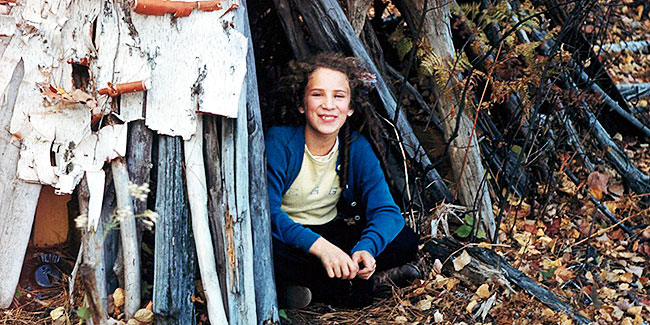
Thanks for joining in with the conversation about these two pieces. I read that essay about changing the world in the days following the outcome of the American election and the part that really smacked me up the side of the head was that the simple question of wanting to change the world in my mind presumed wanting to change it for the better-a reminder that some people don’t conceive of the question in terms of better or worse (let alone all the people whose ideas differ in terms of what ‘better’ would entail) because profit is an overarching motivation (in the context of a hyper-capitalist society anyway) quite apart from debates about morality and ethics (but related, too, of course). I thought “My Evil Mother” was hilarious, although with a serious point beneath the surface. I was glad that she was able to meet with and talk to her father, and learn the true source of that birthday gift! I wasn’t expecting so much time to pass, but I guess that was … the POINT of it all. Also, I absolutely love that photo. And, puppet shows, you say? Hmmm, sounds suspicious to me.
Puppet shows, suspicious? Lol
I never even thought some people might not want to change the world for the better, or that their idea of “better” might be so different from mine. I also thought her perspective as a writer was so valuable for the other conference attendees.
I wonder if MA is capable of writing something without a message hidden inside somewhere?
I love the photo of young Margaret!
I’m also addicted to words – and coffee, LOL.
I love that photo, too. I had never seen that one before!